Dementia, Alzheimer's and Parkinson's Home Care in Columbia, SC
Specialized Care
A memory or movement disorder diagnosis changes daily life for the whole family, not just the person living with it. At Solutions for Living at Home, we help Columbia, SC families navigate that change with specialized in-home dementia care, Alzheimer's home care, and Parkinson's home care that keeps your loved one safe, engaged, and as independent as possible — right where they're most comfortable, at home.
Talk with our care team about a personalized dementia care plan: 803-223-6173
Specialized Support for Memory and Movement Disorders
Caring for someone with dementia, Alzheimer's or Parkinson's takes more than general supervision. Our caregivers are trained to recognize the specific challenges these conditions bring — memory lapses, confusion, wandering risk, mobility changes, and shifts in mood or behavior — and to respond in ways that reduce stress for both the client and the family. Because Solutions for Living at Home is the home care ministry of Still Hopes, every care plan is built on decades of experience serving older adults across the Midlands.
How In-Home Dementia Care Helps Families
Families are often the first line of care, and it's exhausting work. In-home dementia care gives you a trained partner who understands the disease's progression, so you're not guessing at how to respond to a difficult moment. Our team works with you, your loved one, and their healthcare providers to build a care plan around real daily routines — not a generic checklist.
Alzheimer's Home Care Support
Alzheimer's brings its own rhythm of good days and hard days. Our caregivers provide steady companionship, memory-friendly conversation, and gentle redirection when confusion sets in, along with practical help with meals, hygiene, and safety around the home.
Parkinson's Home Care Support
Parkinson's care looks different from dementia care — mobility, balance, and fall prevention are often the bigger day-to-day concerns. Our caregivers can assist with safe transfers and movement, medication reminders, and the physical tasks that become harder as the disease progresses, while still supporting cognitive changes when they're present.
Daily Routines, Safety Reminders and Companionship
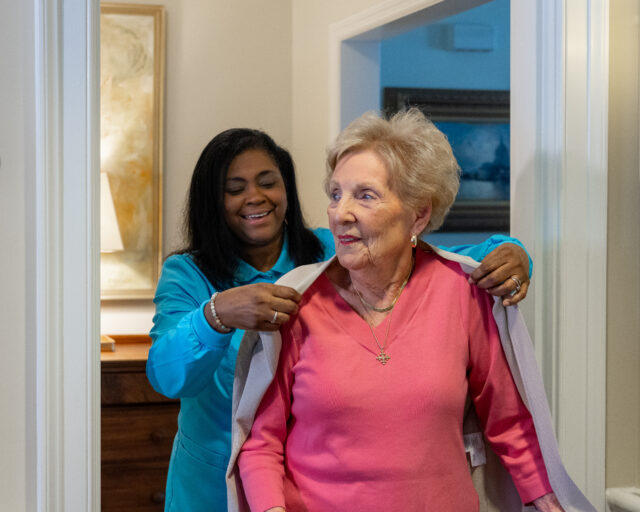
Consistency matters for clients with memory or movement disorders. We help establish predictable daily routines, provide gentle safety reminders around the home, and offer real companionship — conversation, activities, and a familiar face — that supports emotional well-being, not just physical safety.
When to Consider Additional Help at Home
Many families wait too long to ask for help, often because it's hard to know when "more support" is actually needed. Signs to watch for include increased wandering or confusion, missed medications, a fall or near-fall, caregiver burnout, or a loved one who is becoming isolated. If any of that sounds familiar, it's a good time to talk with our team about what a care plan could look like.
Solutions for Living at Home offers Specialized Alzheimer's, Dementia and Parkinson's Home Care in Columbia, Lexington, Irmo, West Columbia, Cayce, Batesburg, Gilbert, Chapin, Elgin, and Northeast Columbia
Dementia and Parkinson's Care
Frequently Asked Questions
See our other home care services.